
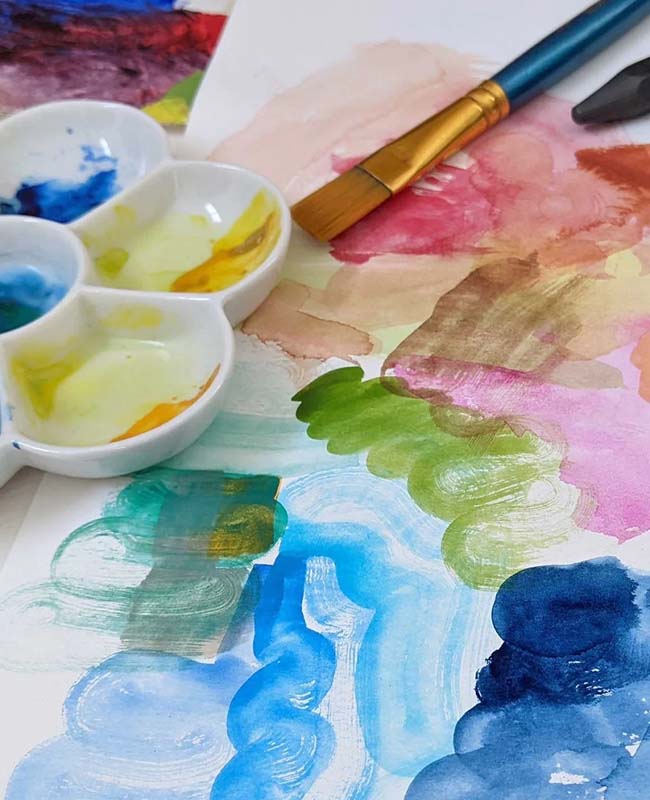
"What is Art Therapy?"
Art therapy applies artistic visual and tactile expression as a means of communication, self-discovery, and lasting change. Combining psychological and psychotherapeutic theory and principles with creative processes to promote mental, physical, and emotional well-being, personal growth, and understanding.
Through various mediums, including drawing, painting, sculpting, craft and collage, individuals are encouraged to explore their thoughts, emotions, and experiences, utilising this gentle, non-threatening and non-verbal therapeutic approach.
The art and creative expression crafted within the therapy session may then act as a tool for reflection, insight, or therapeutic discussion. Through exploring the art, ideas and beliefs subconsciously affecting thoughts, emotions and behaviours may be considered from a completely person-centred perspective.
AT provides a creative outlet to explore and express thoughts, emotions, and experiences through:
- Promoting self-awareness
- Increase self-esteem
- Enhance communication skills
- Reduce symptoms of mental health disorders
- Provide stress relief
- Facilitate personal growth
- Emotional healing
WHO IS ART THERAPY FOR?
Art therapy can benefit everyone of all ages, and can be used within both individual and group settings, addressing various mental health concerns, behavioural issues, trauma, or self-expression.
Examples where AT can help, including but not limited to:
- Emotional or psychological difficulties/mental health challenges eg. anxiety, depression, trauma, or stress.
- Social and intellectual issues
- Autism spectrum disorder
- Attention deficit hyperactivity disorder
- Sensory processing/self-regulation
- Chronic illness
- Life-threatening illness
- Survivors of trauma
- Difficulty with verbal expression or communication of feelings/emotions
- Early childhood/pre-verbal experience of trauma
- Children who lack vocabulary to fully express themselves
- Teens who struggle with or don’t enjoy talking
- Migrants lacking local language
- Unwell/palliative/elderly persons who may lack the energy to talk
WHAT HAPPENS IN A SESSION?
The therapy space is a safe, supported space for you to explore instinctually and creatively. Sessions begin with a brief check in, general emotional state and to identify main areas of focus. Time for art making and creative exploration follows with, as required, time to engage with or reflect upon the product and creative process. Insights are integrated and strategies outlined to encourage a positive mindset, conscious behaviour change and emotional regulation.
There is no need to bring any materials with you to the sessions, and time will be made to discuss any particular preferences. And please do not worry about the need to be ‘good’ at art, as art therapy is not about the finished product and what it looks like, but instead about the process and journey of discovery through creative exploration.
We aim to see children without parents/carers present present, as they may behave differently, allowing engagement with the authentic child within a safe space to express without judgment, confidentially and without expectations, which enables the best therapeutic outcome. Following the session we also suggest not asking what they did or to see their creations, question or display it, but instead simply ask “how was it?”. Their art and creativity are their own visual expression and diary, and may not even like what they have created, which indicates true expression of what may be happening on the inside.
ART THERAPY QUOTES
“I found I could say things with color and shapes that I couldn’t say any other way.”
Georgia O’Keeffe
“Art speaks where words are unable to explain.”
Threadless Artist Mathiole
“At the deepest level, the creative process and the healing process arise from a single source. When you are an artist, you are a healer.”
Ravhel Naomi Remen
“Art enables us to find ourselves and lose ourselves at the same time.”
Thomas Merton
DIFFERENCE BETWEEN ART THERAPY AND ART CLASS
| ART Therapy | ART Class |
|---|---|
|
Professionally trained ART THERAPIST |
Skilled art TEACHER/ INSTRUCTOR |
|
Therapeutic RELATIONSHIP |
STUDENT-TEACHER relationship |
|
SAFE CONFIDENTIAL space |
CLASSROOM or studio space |
|
Main goal is SELF-EXPRESSION |
Main goal to learn to MAKE SOMETHING |
|
Art materials used as TOOLS for self-expression |
Art materials selected specifically for TASK |
|
NO right or wrong way to create/use materials |
May be a CERTAIN or RIGHT way to create |
|
Focus upon the creative PROCESS |
Focus on the art PRODUCT |
|
Art used for REFLECTION/COMMUNICATION |
Art evaluated for QUALITY of design |
Supporting children, individuals, and families to thrive.
Let’s work together to find the right support pathway.


